
When the condition of something underwater is unknown, the traditional options are to drain it, drydock it, or send a diver in. Each carries a cost that has nothing to do with the inspection itself — lost capacity, lost operating days, or a person in an environment they cannot leave quickly. An ROV records the condition of the same surfaces while the asset stays full, in service, and unmanned.
The ROV is deployed from the surface on a tether and flown at a controlled standoff, transmitting continuous video. Footage and stills are timestamped, so each inspection becomes a dated condition record you can compare against the next one. On site, a separate screen shows the live feed to your own engineer, who can direct the pilot in real time and adjust the scope on the spot rather than waiting for the footage afterwards.
What can an ROV actually see underwater?
What the camera sees and the lights reach: hull fouling, coating failure, corrosion, dents and deformation on vessels; cracked or spalled concrete and exposed reinforcement on pier and wharf foundations, breakwaters and sea walls; the condition of submerged pipelines, cables, intake and outfall structures; and marine growth, sedimentation and debris build-up wherever they obstruct access or flow.
See the assets we inspect with an ROVHow do you measure a defect you can only see on video?
The ROV projects two parallel laser dots onto every surface the camera looks at, held a fixed 10 cm apart. Because that spacing is known, every image carries its own scale reference regardless of how far the ROV is from the subject — so a crack width, a hole, or an area of spalling can be measured directly from the footage, with no extra instrumentation and no return visit.
When is an ROV not the right tool?
Three cases, and we will tell you at scoping. Water clarity limits how much detail is recoverable — in heavily silted or turbid water the effective inspection range drops sharply. The tether limits how far the ROV can travel from the deployment point. And high-current open-water conditions are unsuitable, because the ROV cannot hold position accurately enough to produce a usable record. Ports, harbours, rivers, enclosed tanks, reservoirs and sheltered marine environments are where this method performs best.
Tell us about your asset and we will confirm



Just call us, and we'll help you.
The ROV flies the hull at a controlled standoff and records continuously, so every square metre is on record — not only the areas a diver happened to reach. Coating breakdown, fouling, anodes, portholes, sea chests and the hull-to-appendage junctions are all captured with the vessel remaining alongside in port.
Because the footage and stills are timestamped, each survey becomes a dated record. Successive inspections can be compared against one another, so coating loss and fouling are tracked as rates over time rather than assessed afresh on every occasion.
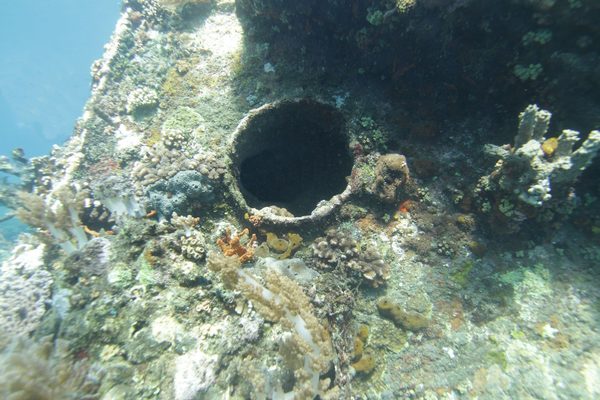
Sealed tanks, reservoirs, clear-water chambers and intake structures are the hardest of all assets to inspect. Draining one takes capacity out of service; putting a diver inside one is a confined space entry, with all the permitting and standby rescue cover that implies.
The ROV enters through an existing opening and records the walls, floor, roof underside, pipe penetrations and outlets while the asset stays full and in service. Sediment depth, coating loss, exposed reinforcement and the condition of inlet and outlet structures are all visible without draining anything.
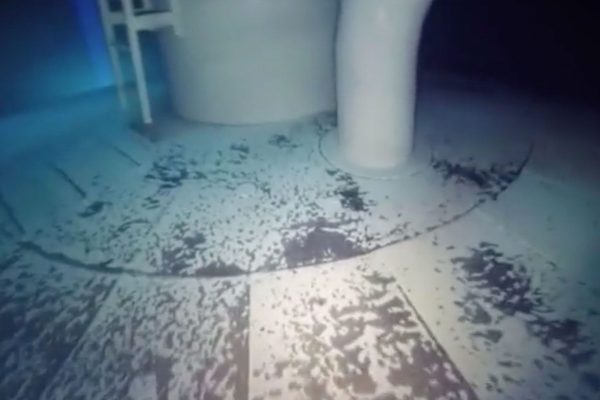
On weirs, penstocks, sluice gates, lock walls and culverts, the parts that fail are usually the parts that are submerged. The ROV investigates specific locations — including anomalies that a prior hydrological survey detected but could not explain — and returns visual evidence of what is actually there, rather than a measurement that still needs interpreting.
Deployment is from the bank, from a boat, or from the structure itself, so the waterway stays in service and nobody enters the water. On a live river or canal that is usually the difference between an inspection that happens this month and one that waits for a shutdown window.
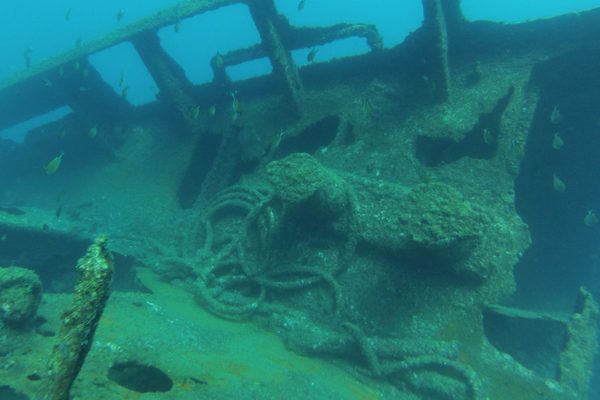
No diver, no standby rescue team, no dive plan to approve. The inspection runs with all personnel on the surface, which is usually the largest single cost and risk item removed from the job.
Tanks are not drained, vessels are not drydocked, and waterways are not dewatered. Whatever the asset holds, it keeps holding it while the inspection runs.
Two laser dots held 10 cm apart project onto every surface in frame, so each image carries its own scale reference. Crack widths, holes and areas of spalling are measured straight from the footage, with no extra instrumentation.
A second screen on site shows the live feed to your own representative, who can direct the pilot in the moment — closer to that crack, back to that joint — rather than reviewing the footage afterwards.
Video and stills are timestamped, so each inspection becomes a condition record you can compare against the next one. Coating loss and fouling are then tracked as rates over time.
Mobilisation is small and the asset usually stays operational throughout, so the work does not have to wait for an outage, a low tide, or a planned stoppage.
Using HD video and photography in both freshwater and saltwater, our submersible drones capture and compile highly detailed and actionable data of your underwater assets. Like their airborne counterparts, submersible drones are becoming the most essential tool in surveying and inspecting hard-to-reach assets.
Engineers With Drones supplies you with clear, actionable reports on the status of your underwater assets. We understand that no two jobs are the same, and tailor our approach to your needs.
Using an ROV for your inspections provides numerous benefits, including increased safety and efficiency. By removing the need for divers, who are subject to the dangers of underwater environments, ROVs can inspect hard-to-reach places without putting lives at risk. Furthermore, ROVs can gather and transmit high-resolution video and photographic data in real-time, allowing for immediate analysis and decision-making. This means that potential problems can be identified and addressed quickly, preventing costly delays and repairs in the future. In addition, our ROVs are equipped with advanced sensors and imaging technology, which can detect even the smallest defects or anomalies, ensuring that your marine infrastructure is in optimal condition.
An inspection is delivered as a condition record, not a folder of raw footage. The output is built so that somebody who was not on site can still reach a conclusion from it — your maintenance team, your engineer, or your insurer.
Unedited footage of the full inspection run, timestamped and retained, so nothing is summarised away and any finding can be re-examined later.
Each finding captured as a still, marked up on location, and referenced to the part of the structure it belongs to.
Because the two laser dots sit a known 10 cm apart in frame, defects carry measured dimensions rather than an impression of how they looked.
A written assessment of what was found and what it means, in a form your maintenance team or insurer can act on without further interpretation.
An ROV covers what a boat, a ladder or a diver cannot reach. Where the same structure also has parts above the waterline, an aerial drone survey and an ROV pass are usually completed in a single mobilisation, so you get one condition picture of the whole asset rather than two half-answers from two suppliers.
Related asset pages:
Most water infrastructure has a dry side and a wet side, and a condition assessment that covers only one of them is only half an answer. The pages below cover what we inspect from the air and what we inspect below the waterline.
Looking for something specific?
Let us know, and we’ll see what we can do.
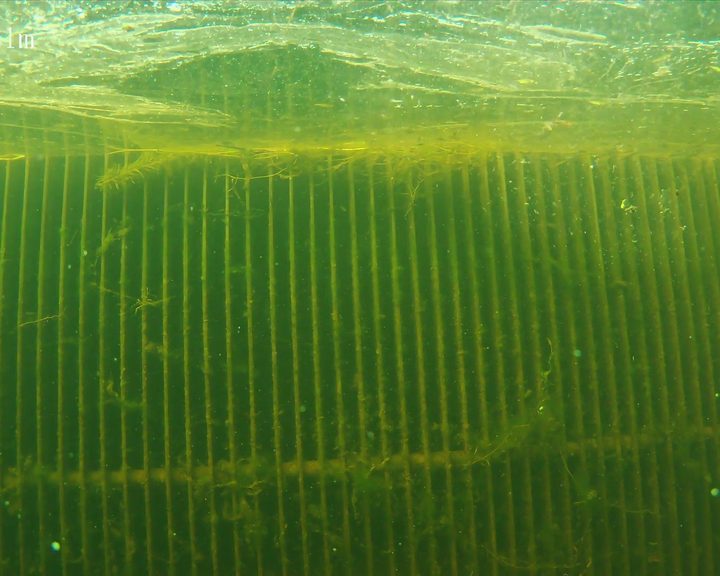
Engineers With Drones carried out an ongoing underwater ROV inspection programme across most of the ESB's hydroelectric sites — inspecting critical infrastructure without divers or dewatering.
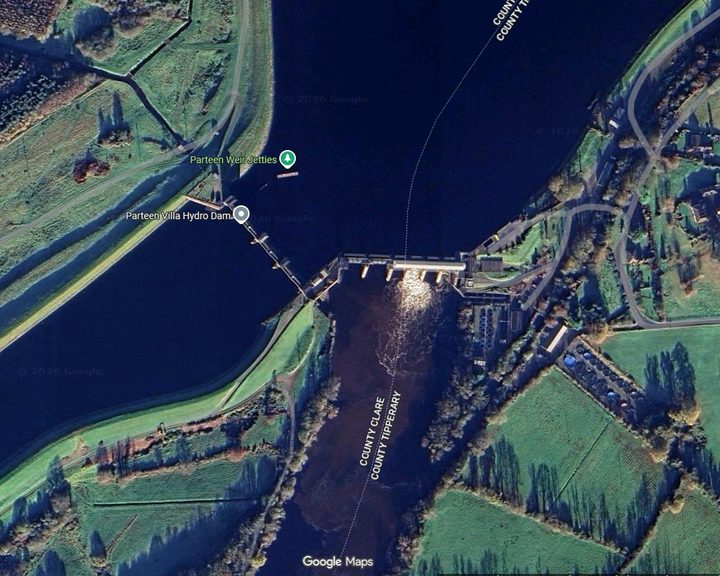
Engineers With Drones used an ROV underwater drone to inspect anomalies in the Ardnacrusha head race canal identified by hydrological survey - historic infrastructure built in the 1920s.
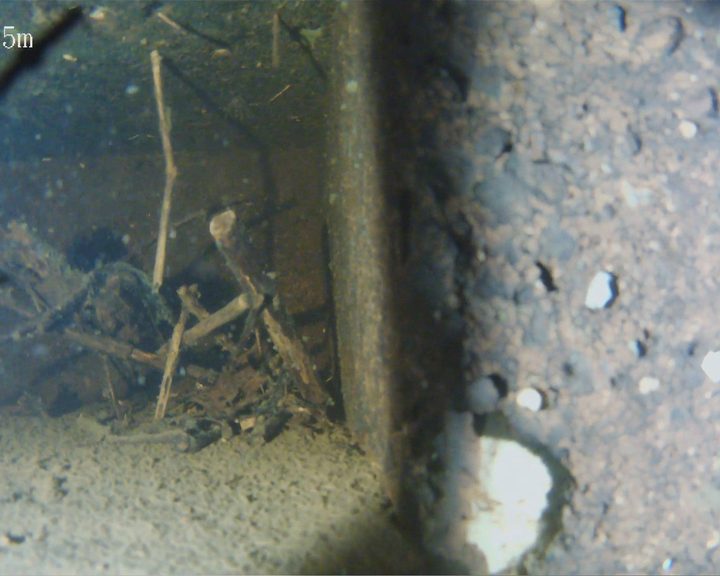
Engineers With Drones deployed an underwater ROV to inspect a live riveted steel penstock, expansion joint, inlet screens, and spiral casing without drain-down or diver entry.
Complex surveys and inspections require more than just a pilot. Our engineers can help you scope your requirements and indentify the right approach.